
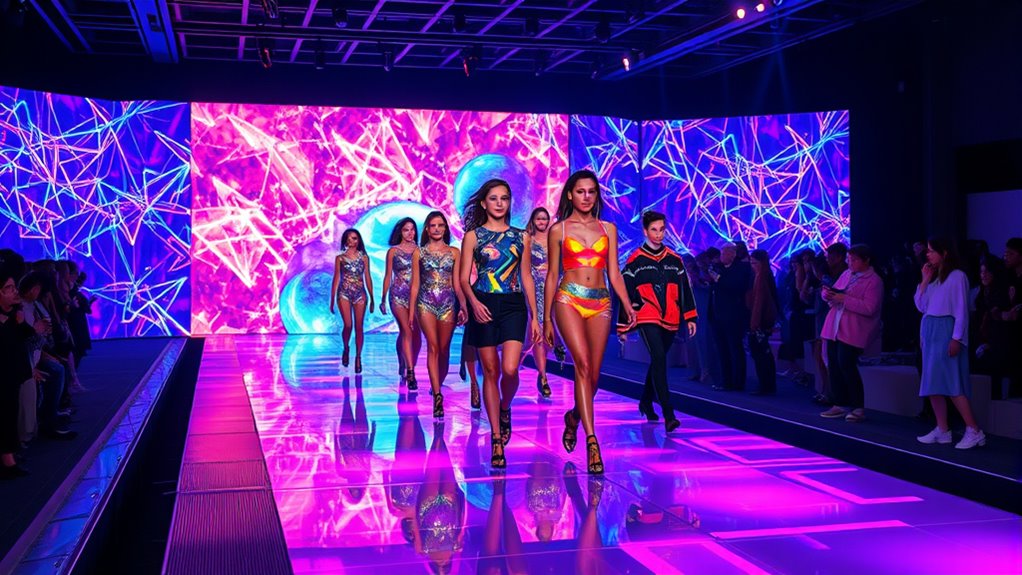

AI is revolutionizing fashion by offering highly personalized styles tailored to your preferences, body shape, and taste. It analyzes vast data to predict trends and create custom designs, making shopping more intuitive and efficient. Ethical concerns like data security and bias are being addressed to guarantee responsible use. This shift toward algorithmic style also promotes sustainability by reducing waste and overproduction. Keep exploring to discover how AI continues to shape a more inclusive and innovative fashion landscape.
Key Takeaways
- AI analyzes consumer data to deliver personalized fashion recommendations based on individual preferences and body types.
- Trend prediction algorithms analyze social media and consumer behavior to inform sustainable, rapid fashion design.
- Digital personalization enables exclusive, bespoke collections, transforming mass production into highly customized fashion.
- Ethical considerations focus on data privacy, security, and reducing bias to promote fairness and inclusivity.
- AI enhances consumer experience by curating styles, minimizing waste, and supporting more sustainable, ethical fashion practices.
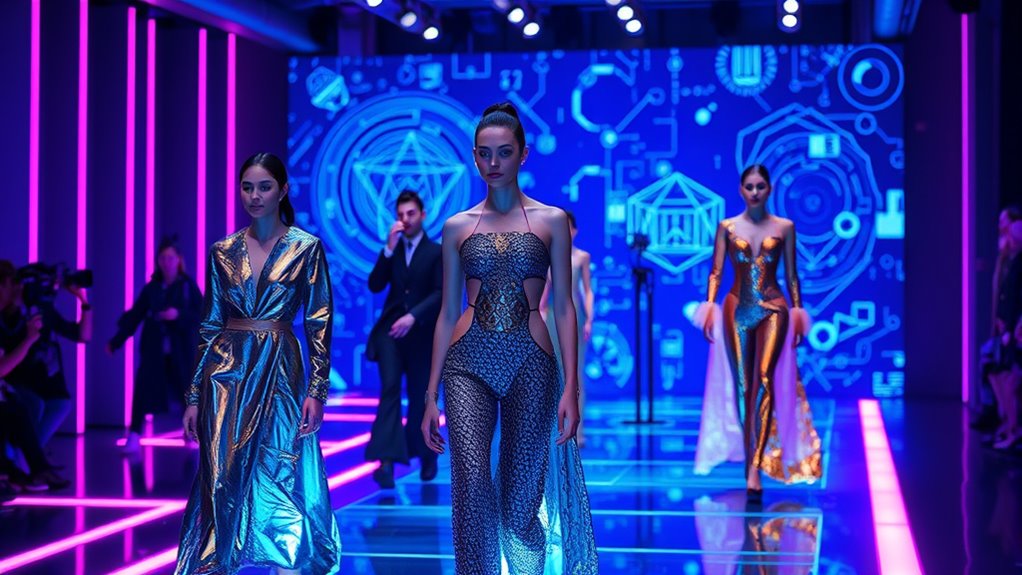
Have you ever wondered how artificial intelligence is transforming the way we design, choose, and wear clothes? It’s no longer just about fashion trends; AI is reshaping the entire industry, making it more personalized and efficient. With digital tools, brands can now analyze vast amounts of data to understand what you like, how you shop, and what styles suit you best. This shift toward digital personalization means you get recommendations tailored specifically to your taste, body shape, and preferences. Instead of browsing endless racks or scrolling through countless options, AI algorithms curate selections that resonate with your unique style, saving you time and effort. This level of customization enhances your shopping experience, making it feel more intuitive and satisfying. Additionally, integrating ethical practices in AI development ensures that your data is handled responsibly and fairly. This awareness fosters trust and promotes a more inclusive fashion landscape. This level of customization enhances your shopping experience, making it feel more intuitive and satisfying. However, as AI becomes more integrated into fashion, AI ethics come into play. Concerns about privacy, data security, and bias are more relevant than ever. When your personal data is used to craft customized recommendations, you need to trust that your information is handled responsibly. Ethical AI practices guarantee that data is collected transparently, stored securely, and used solely to improve your experience without exploitation. As a consumer, you should be aware of how your data is being used and advocate for responsible AI development. Ethical considerations also extend to avoiding algorithmic bias, which can reinforce stereotypes or exclude certain groups. Designers and companies are increasingly aware of these issues, working toward creating AI systems that promote fairness and inclusivity.
AI personalizes fashion, curating styles just for you and transforming shopping into a more intuitive, efficient experience.
Meanwhile, the impact of AI on fashion design is equally profound. Algorithms can predict upcoming trends by analyzing consumer behavior and social media patterns, guiding designers to create collections that resonate with future demands. This not only accelerates the design process but also reduces waste, making fashion more sustainable. Digital personalization, powered by AI, allows brands to produce limited editions or bespoke pieces, catering to individual tastes while minimizing excess inventory. For you, this means that the clothes you wear could be uniquely yours or part of a limited run, emphasizing exclusivity and personal expression. Moreover, understanding how AI can support supporting children through divorce can help create more compassionate and inclusive fashion marketing campaigns that resonate with diverse audiences.
In essence, AI is making fashion smarter, more ethical, and more attuned to your personal identity. It’s transforming the industry from mass-produced to highly personalized, where your preferences directly influence what’s created and recommended. As you embrace these innovations, it’s important to stay informed about the ethical implications and advocate for responsible AI use. The future of fashion isn’t just about style—it’s about creating a seamless, personalized experience that respects your privacy and promotes inclusivity. With AI leading the way, your wardrobe is becoming more than just clothing; it’s a reflection of your individual story.
Frequently Asked Questions
How Does AI Personalize Fashion Recommendations for Individual Users?
You get personalized fashion recommendations through personalization algorithms that analyze your user data, like browsing history, purchase patterns, and style preferences. These algorithms identify trends and similarities in your behavior, then match you with items that suit your taste. As you interact more, the system refines its predictions, ensuring you receive tailored suggestions that reflect your unique style, making shopping more efficient and enjoyable.
What Ethical Concerns Arise With Ai-Driven Fashion Design?
You risk turning your closet into a data graveyard, where privacy is just a pixel in the digital abyss. Ethical concerns arise when AI design crosses lines of cultural insensitivity or exploits personal data. Imagine a fashion AI with a soul—if it had one—failing to respect diverse traditions or secretly hoarding your style secrets. It’s a wild world where algorithms must learn to be sensitive and secure, not just stylish.
Can AI Create Entirely New Fashion Genres?
Yes, AI can create entirely new fashion genres by leveraging fashion innovation and creative algorithms. You might find AI exploring uncharted styles by analyzing vast data and blending elements in unexpected ways. This process allows for groundbreaking designs that push traditional boundaries. As you embrace AI-driven creativity, you’ll notice how algorithms inspire novel aesthetics, making fashion more dynamic and diverse, opening doors to genres that were previously unimaginable.
How Does AI Impact Traditional Fashion Industry Jobs?
AI impacts traditional fashion industry jobs by causing automation displacement, which streamlines tasks like design and manufacturing, potentially reducing roles. However, it also drives skill transformation, encouraging workers to develop expertise in new technologies and digital tools. You might find yourself adapting to new roles that focus on AI-driven creativity, data analysis, or digital marketing, making your skills more versatile and essential in the evolving fashion landscape.
What Are the Limitations of AI in Understanding Cultural Fashion Nuances?
Imagine AI as a traveler trying to grasp a country’s soul through a fleeting glance. It struggles with cultural misinterpretations and stylistic insensitivity because it lacks deep understanding of traditions, symbols, and history. AI can’t fully decode the subtle nuances of cultural fashion, risking missteps that offend or misrepresent. Its inability to feel context means it often misses the rich, layered meanings woven into diverse styles, limiting authentic cultural appreciation.
Conclusion
As you explore AI fashion, remember it’s like having a personal stylist with a limitless wardrobe. Just last year, a small startup used algorithms to predict trends, boosting sales by 30%. Imagine crafting your unique style effortlessly, guided by data-driven insights that evolve with you. This isn’t just a trend; it’s a revolution, turning the runway into a playground of endless possibilities where your style is only limited by your imagination.